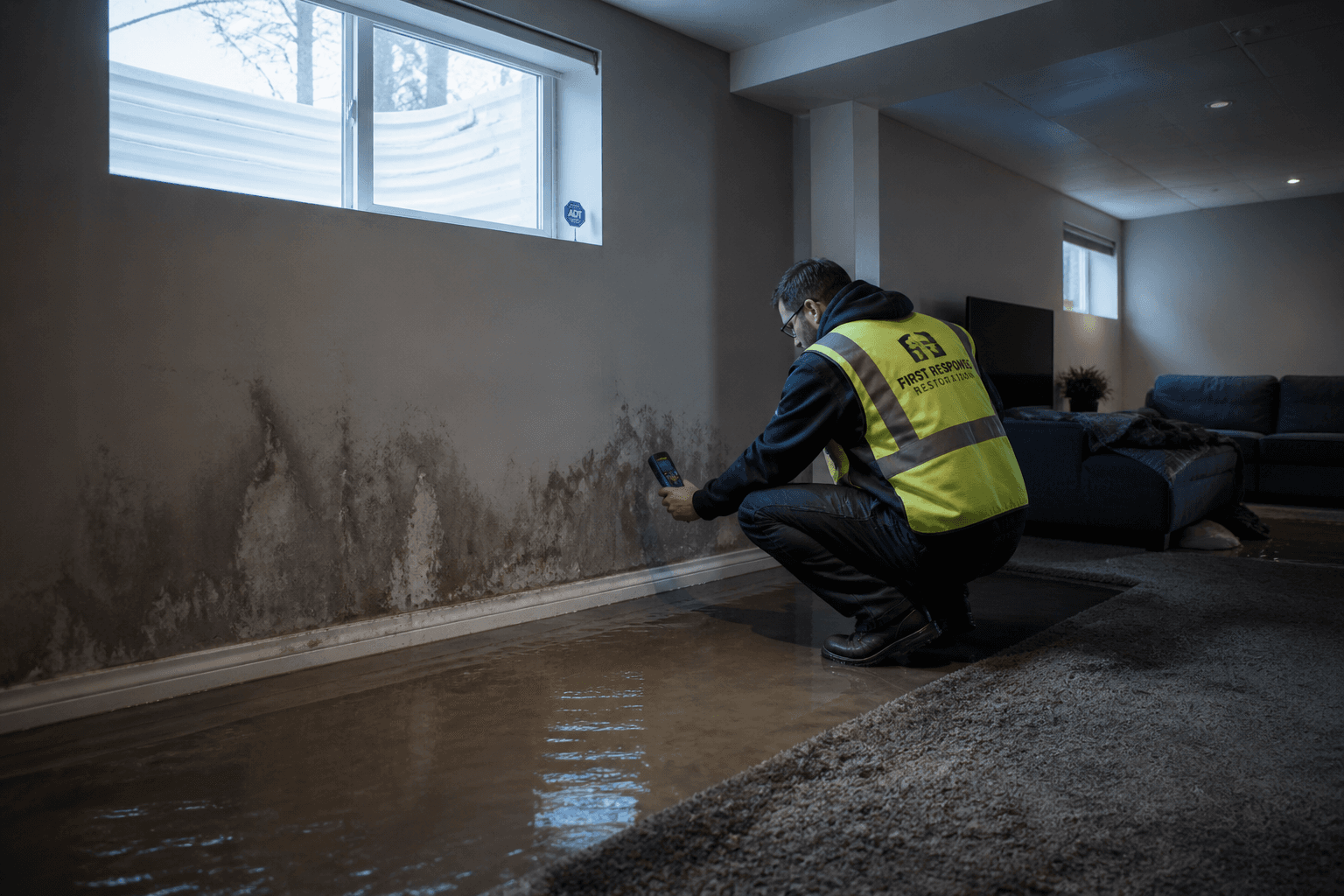
Frozen pipes are one of the most preventable causes of serious water damage we see. When water freezes it expands, and that pressure can split a pipe wide open. The pipe might hold while it's frozen, then let go when it thaws, sometimes while you're out, flooding a home for hours. A bit of winter prep goes a long way in our climate.
Why Maritime homes are at risk
Our deep freezes, drafty older homes, and the number of properties with unheated crawl spaces and basements make for a lot of vulnerable plumbing. Pipes running through exterior walls, garages, and crawl spaces are the usual victims because they're the coldest.
Cheap habits that prevent burst pipes
- On bitter-cold nights, let a tap trickle, moving water is far harder to freeze
- Open cabinet doors under sinks so warm air reaches the pipes
- Keep your heat on even when you're away, never below about 13°C / 55°F
- Insulate exposed pipes in the basement, garage, and crawl space
- Disconnect and drain garden hoses before the first hard freeze
- Know where your main water shut-off is, before you need it in a hurry
Heading away for the winter?
If you're leaving for an extended stretch, the safest move is to shut off the main water supply and drain the lines, or have someone check the house regularly. This matters even more for the larger homes on wells out in Fall River, where a burst line can run a long time before anyone notices.
If a pipe does burst
Shut off the main water supply immediately, then call for water damage restoration right away. The faster extraction and drying start, the less damage soaks into your floors and walls, and the less chance mold gets a foothold afterward.