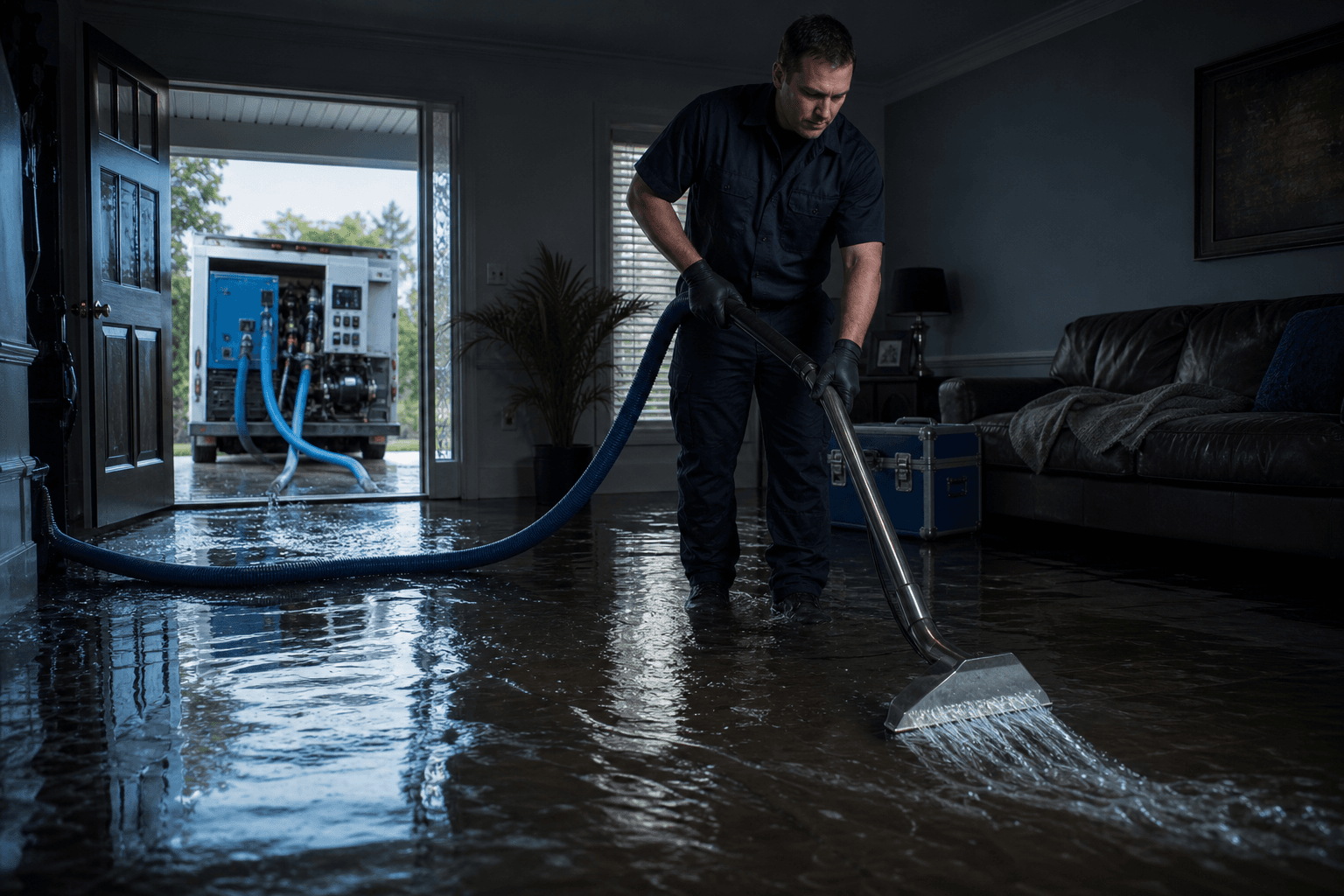
Water Extraction Services in Dartmouth, NS
Fast removal of standing water from flooded rooms, basements, and crawl spaces. Commercial-grade extraction equipment that gets the water out before serious damage sets in.
Water extraction is the first step of any water damage restoration job. We pump out standing water fast using commercial truck-mounted and portable extraction units, removing it before it spreads further into walls, flooring, and framing. Available across Dartmouth and the Halifax area.
Standing water spreads fast. It wicks up drywall, soaks into carpet padding, and finds its way under flooring and into the framing you can't see. Every minute it sits, the damage footprint gets bigger, especially in finished basements and living spaces where materials hold water like a sponge.
We don't just pump what's visible. We use moisture meters to trace where water has already moved, so extraction targets the full affected area, not just the puddle on the floor.
What water extraction covers
- Truck-mounted extraction for large volumes of standing water
- Portable extraction units for tight spaces, stairs, and upper floors
- Wet carpet and padding extraction before deciding what can be saved
- Subfloor extraction to pull water from beneath flooring
- Crawl space pumping for low-clearance and hard-to-reach areas
- Sump pit clearing when debris or failure has left water backed up
When you need emergency water extraction
- Burst pipe flooding a room or basement
- Appliance overflow from a washer, dishwasher, or water heater
- Sump pump failure during a storm
- Toilet or sewage backup
- Storm water or ground water entering through the foundation
Extraction vs full restoration
Water extraction is step one, not the whole job. Once the standing water is out, structural drying removes the moisture trapped inside walls, floors, and framing. After the structure is genuinely dry, repair and replacement of damaged finishes can begin. Skipping or rushing any step leaves moisture behind, and that's what leads to mold, warped floors, and failed repairs weeks later.
Serving Dartmouth and the whole Halifax area
Dartmouth Water Damage Pros is based in Dartmouth and covers the surrounding communities. See all areas we serve →
Water Extraction Services: common questions
How quickly can you get water extracted from my home?
We can usually be on site within a few hours for emergency water extraction in Dartmouth and the Halifax area. The actual extraction work itself typically takes 1 to 3 hours for a standard residential flood, depending on how much standing water is present and what surfaces are involved. The faster we get the bulk water out, the less it spreads into walls, subfloor, and framing, which directly affects the cost and scope of the full water damage restoration job.
What equipment do you use for water extraction?
We use commercial truck-mounted extraction units for large volumes of standing water, plus portable extractors for tight spaces, stairs, and upper floors where the truck can't reach. For carpet and padding, we use specialized wet extraction tools that pull water from the fibers and pad before we decide what can be saved. Moisture meters go hand in hand with extraction so we know where water has spread beyond what's visible on the floor.
Can you extract water from carpet and save it?
Sometimes, yes, but it depends on how long the carpet was wet and what type of water caused the damage. Clean water from a burst supply line caught within 24 hours often allows carpet and pad to be extracted and dried in place. Category 2 or 3 water from sewage, ground water, or long-standing contamination usually means the carpet and pad need to come out. We extract first, assess honestly, and tell you what's worth saving before structural drying starts.
My basement has 2 inches of standing water. What happens first?
We start with a safety check for electrical hazards and structural concerns, then begin truck-mounted water extraction to remove the standing water as fast as possible. While extraction runs, we use moisture meters to map where water has already spread into walls, flooring, and the subfloor below. Once the bulk water is out, we set up commercial air movers and dehumidifiers for structural drying, which typically runs 3 to 5 days for a Dartmouth basement flood.
Is water extraction covered by home insurance in Nova Scotia?
Water extraction is usually covered when it's part of a sudden, accidental water damage event like a burst pipe or appliance overflow, which most standard Nova Scotia home insurance policies include. Gradual leaks, maintenance issues, and overland flooding typically aren't covered unless you have specific endorsements. We document the extraction and moisture readings thoroughly, which helps your claim for the full water damage restoration process go smoothly.
What's the difference between water extraction and water damage restoration?
Water extraction is the first step: removing standing and absorbed water from floors, carpet, and accessible surfaces. Full water damage restoration is the complete job, extraction, then structural drying to remove moisture from walls and framing, then assessment, removal of unsalvageable materials, repair, and insurance documentation. Extraction without structural drying leaves moisture trapped in the structure, which is the main reason mold shows up in Halifax-area homes weeks after a flood.
Got water damage or mold? Let's sort it out.
Call and tell us what's going on, or send a message and we'll get right back to you. Dartmouth's local restoration company covering the whole Halifax area.