Water Damage Ceiling Restoration in Dartmouth, NS
A stained, sagging, or soaked ceiling needs more than a coat of paint. We find the source, dry the structure, and restore it properly.
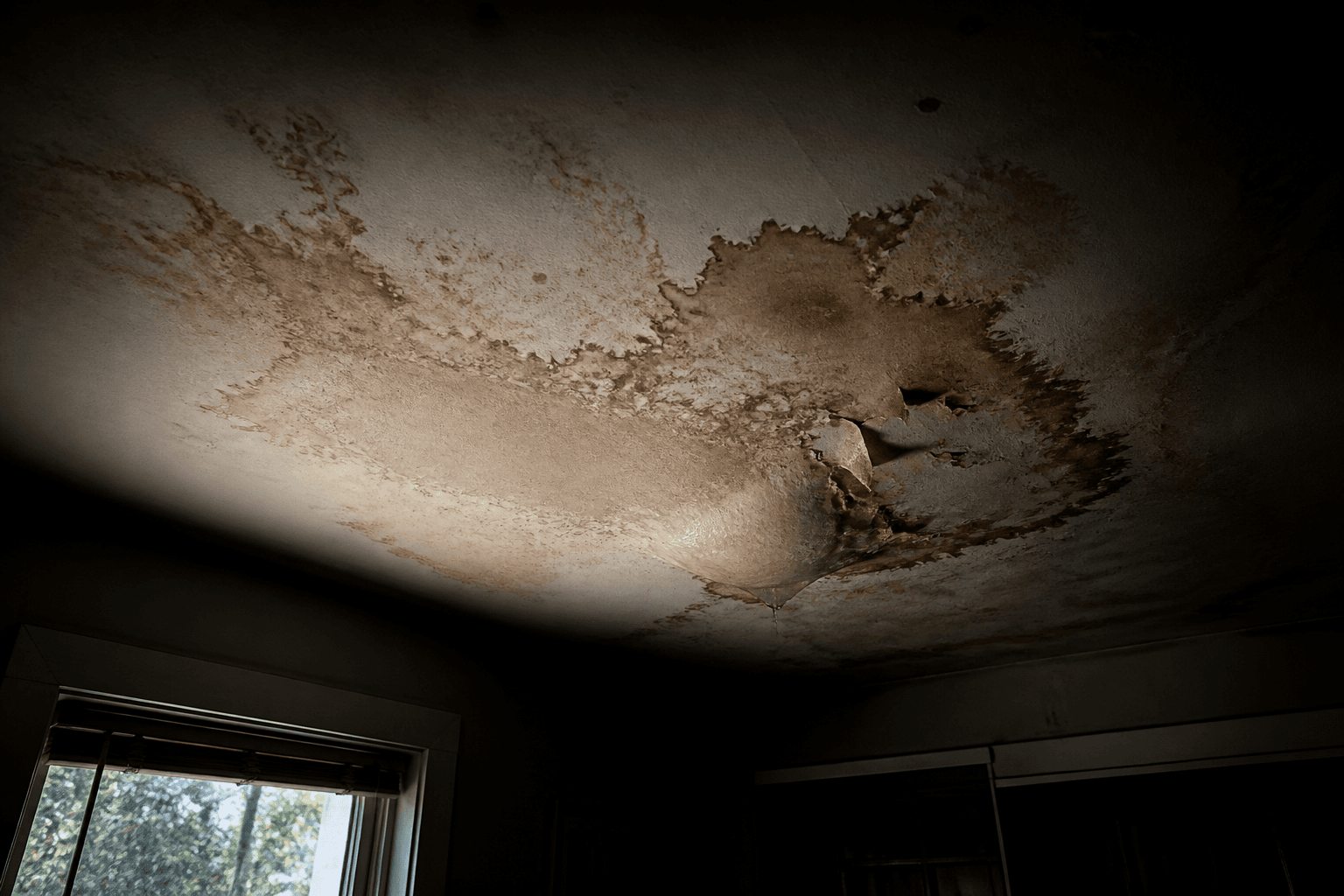
Ceiling water damage from roof leaks, upstairs plumbing, or a bathroom leak from above needs more than a coat of paint. You need to find the source, dry the structure, and repair or replace affected drywall before any cosmetic fix. We handle the full job in Dartmouth and the Halifax area.
A stain on the ceiling is a symptom. The real question is what's above it and whether it's still wet. In most Dartmouth and Halifax homes, ceiling water damage comes from one of a few sources: a roof leak, an ice dam that pushed water in through the soffit, a plumbing pipe running between floors that dripped or burst, or a bathroom upstairs with a leak at the toilet base, the shower pan, or the supply lines.
Each of those leaves a similar stain, but the fix is different. You can't know what to repair without tracing it back to the origin first.
What a sagging or saturated ceiling means
Drywall absorbs water and gets very heavy fast. A ceiling that's soft to the touch, visibly bowing, or bulging has soaked up a significant amount of water and is at risk of failing. If you see a bulge forming, the safest move is to puncture a small hole at the lowest point to let the water drain in a controlled way, rather than waiting for the whole section to come down. Then get clear of the room and call for help.
Why you can't just paint over it
Water stains bleed through standard paint within a few weeks. But more importantly, painting over a water-damaged ceiling without confirming the structure is dry traps moisture inside. That trapped moisture grows mold on the back face of the drywall, and by the time it shows up as a problem again you often have mold in the ceiling cavity too. Stain-blocking primer and paint is the last step, not the only step.
Our ceiling water damage restoration process
- Locate and stop the water source before any repairs begin
- Dry the ceiling structure with air movers and dehumidifiers
- Take moisture readings to confirm the drywall and framing are dry throughout
- Remove and replace drywall sections that are saturated, warped, or mold-affected
- Treat framing and cavity with antimicrobial product if needed
- Prime with stain-blocking primer and repaint to match
Common sources we find above damaged ceilings
- Roof leaks from missing shingles, failed flashing, or ice dam water intrusion
- Upstairs bathroom leaks at the shower pan, toilet seal, or supply lines
- Plumbing drains and supply pipes running through the ceiling cavity
- HVAC condensate lines that overflowed or came loose
- Bathroom exhaust fans venting into the ceiling space instead of outside
Serving Dartmouth and the whole Halifax area
Dartmouth Water Damage Pros is based in Dartmouth and covers the surrounding communities. See all areas we serve →
Water Damage Ceiling Restoration: common questions
What causes water stains on a ceiling?
Water stains on a ceiling mean water is or was sitting above that spot. Common sources are a leaking roof, ice dam buildup in winter, a plumbing pipe above the ceiling (common between floors in multi-story homes), an overflowing bathtub or toilet from an upstairs bathroom, or condensation on an HVAC line. The stain alone doesn't tell you which one. You need to trace the source before repairing, because if it's still active, a fresh coat of paint won't hold for long.
Is a water-damaged ceiling structurally dangerous?
A sagging or heavily saturated ceiling can be, yes. Water-soaked drywall gets very heavy and can fail without warning, pulling screws out of framing and coming down. If your ceiling is bulging, soft to the touch, or visibly sagging, stay out of the room below it, especially if it's a large section. A stained but firm ceiling is less urgent, but still needs to be investigated for the source and checked for mold in the material above it.
Can I just paint over a water-stained ceiling?
Painting over a water stain doesn't fix it. The stain will bleed through regular paint within a few weeks. More importantly, painting over water-damaged material without drying it and finding the source traps moisture and creates a mold problem you can't see. You need to stop the water, dry the material, confirm there's no mold, then prime with a stain-blocking primer. That last step comes last, not first.
How do you repair a water-damaged ceiling in Dartmouth?
The repair starts with finding and stopping the source of water. Then we dry the ceiling structure with air movers and dehumidifiers, taking moisture readings to confirm it's actually dry inside. If the drywall is saturated, warped, or mold-affected, we remove it and replace it. Once the new material is in place and the framing is confirmed dry and treated, we prime with a stain-blocking primer and repaint. Skipping any of those steps leaves the job incomplete.
What does a brown ring stain on my ceiling mean?
A brown or yellow ring stain is a classic sign of a past or current water leak. The ring forms when water soaks the drywall and evaporates, leaving dissolved minerals and organic material behind at the edge of the wet area. If the stain is growing or the ceiling feels soft, the leak is still active. Even an old-looking stain is worth checking: the drywall above it may still hold moisture, and mold could be growing on the back face of the panel.
Can ceiling water damage repair be covered by home insurance?
It depends on the cause. Water damage from a sudden, accidental event like a burst pipe, an overflowing bathtub, or a storm-related roof failure is usually covered under a standard Nova Scotia home insurance policy. Gradual leaks, condensation issues, and maintenance-related damage typically are not. We document the damage thoroughly so your claim is as clear as possible. Call your insurer to clarify what's covered before we start, and we'll make sure the paperwork supports your case.
Got water damage or mold? Let's sort it out.
Call and tell us what's going on, or send a message and we'll get right back to you. Dartmouth's local restoration company covering the whole Halifax area.