Residential Water Damage Restoration in Dartmouth, NS
Burst pipes, flooded basements, appliance leaks, storm water. Residential water damage restoration for homes across Dartmouth and the Halifax area.
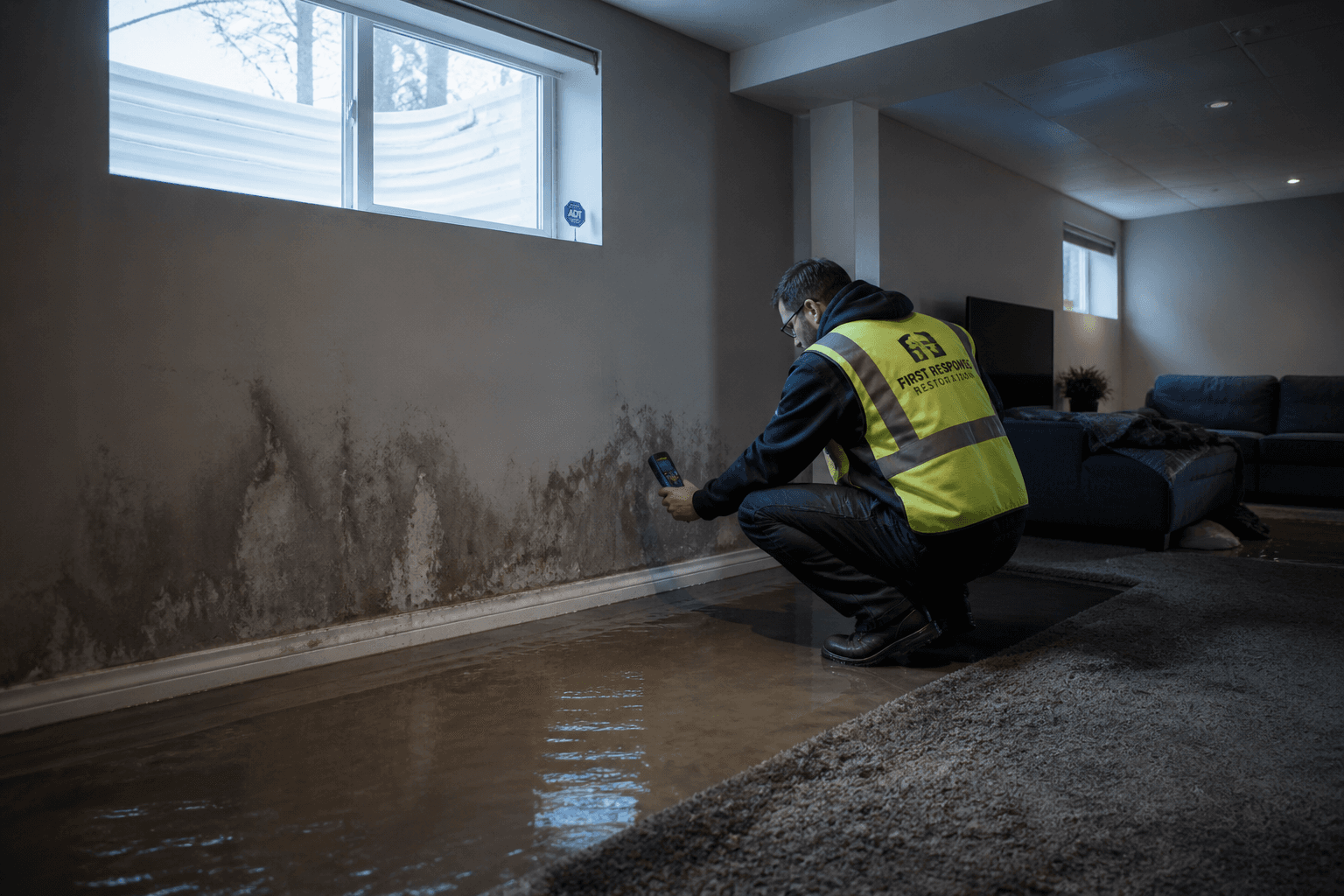
Residential water damage restoration covers extracting water, drying the structure, and repairing damage from burst pipes, appliance leaks, basement floods, storm water, and roof leaks in Dartmouth and Halifax-area homes. Proper structural drying is the step most homeowners skip, and it's the one that prevents mold.
Water damage in a home can come from a lot of directions. A burst pipe in a Maritime winter. A dishwasher leaking slowly behind the kick plate for weeks. A basement that took on spring melt. Storm water through a window well. A roof that let ice-dam water in through the soffit. Each one is different, but the core problem is the same: water gets into the structure and needs to come out properly.
Types of residential water damage we restore
- Burst or frozen pipes, most common in unheated spaces during Nova Scotia winters
- Appliance leaks from dishwashers, washing machines, water heaters, and fridge lines
- Basement flooding from heavy rain, spring melt, or failed sump pumps
- Roof leaks and ice dam water intrusion through soffits or ceiling spaces
- Sewer backup and overland flooding
- Slow hidden leaks behind walls or under floors that go undetected for weeks
The residential restoration process
- Water extraction with truck-mounted and portable pumps
- Moisture mapping to find water inside walls, floors, and framing
- Commercial drying with air movers and dehumidifiers
- Daily moisture readings to track drying inside materials, not just on the surface
- Removal of unsalvageable drywall, insulation, and flooring
- Antimicrobial treatment to prevent mold from establishing
- Photos and detailed documentation for your insurance claim
Why proper drying is the job that matters most
A lot of homeowners extract the standing water and figure it's done, or run a household fan for a few days and call it dry. But wet drywall, subfloor, and framing hold moisture far longer than the surface suggests. Materials that stay damp grow mold, and mold inside a wall cavity usually isn't found until the smell starts or a renovation reveals it.
We use moisture meters to take readings inside the materials, not just at the surface, and we keep drying until the numbers are back in a safe range for each material type. That's what separates a real restoration from just a cleanup.
Serving Dartmouth and the whole Halifax area
Dartmouth Water Damage Pros is based in Dartmouth and covers the surrounding communities. See all areas we serve →
Residential Water Damage Services: common questions
What are the most common causes of residential water damage in Dartmouth and Halifax?
The top causes we see in Dartmouth and Halifax-area homes are burst or frozen pipes in winter, basement flooding from heavy rain or spring melt, failed sump pumps, appliance leaks from dishwashers, washing machines, and water heaters, roof leaks from ice damming or storm damage, and sewer backup. Older homes across HRM often have the added challenge of aging plumbing and weeping tile systems that are long overdue for attention.
Can a small appliance leak cause serious water damage in a home?
Yes. A slow dishwasher or washing machine leak that goes unnoticed for days or weeks saturates the subfloor and framing underneath. By the time it's visible, the water has often spread further than it looks and mold may have already started. Appliance leaks behind and under cabinets are one of the more common hidden water damage finds in Dartmouth homes. Don't ignore a musty smell near an appliance or a soft spot in the floor nearby.
What is the residential water damage restoration process?
It starts with extracting standing water with truck-mounted or portable pumps, then we set up commercial air movers and dehumidifiers for structural drying. We take moisture readings throughout to track progress inside walls, floors, and framing. Materials that can't be dried effectively, like saturated drywall or soaked insulation, get removed. Once the structure is dry to target levels, we treat for mold prevention, document everything for insurance, and assess what needs to be repaired.
How do I prevent basement flooding in a Dartmouth home?
The best steps: maintain your sump pump and test it before spring melt season, make sure downspouts direct water away from the foundation, clear gutters each fall, seal any visible cracks in the foundation, and consider a battery backup for your sump in case power goes out during a storm. Many Dartmouth homes also have aging weeping tile systems around the foundation that can fail. If you've had repeated flooding, that system is worth looking at specifically.
How long does it take to dry a residential basement after flooding?
A residential basement typically takes 3 to 5 days to dry with professional equipment, but that's a rough range. It depends on how much water came in, how long it sat, what materials got wet, and the size of the space. Finished basements with drywall and carpet take longer and usually require material removal. We monitor moisture readings daily and give you honest updates on progress.
Does residential water damage always lead to mold?
Not if it's dried properly and quickly. Mold needs moisture, time, and organic material to grow. If you extract the water and dry the structure to safe moisture levels within 24 to 48 hours, mold typically doesn't establish. The problem is when water sits too long, or when the drying looks done on the surface but hidden materials stay damp. That's why proper moisture monitoring matters, not just fans and waiting.
Got water damage or mold? Let's sort it out.
Call and tell us what's going on, or send a message and we'll get right back to you. Dartmouth's local restoration company covering the whole Halifax area.