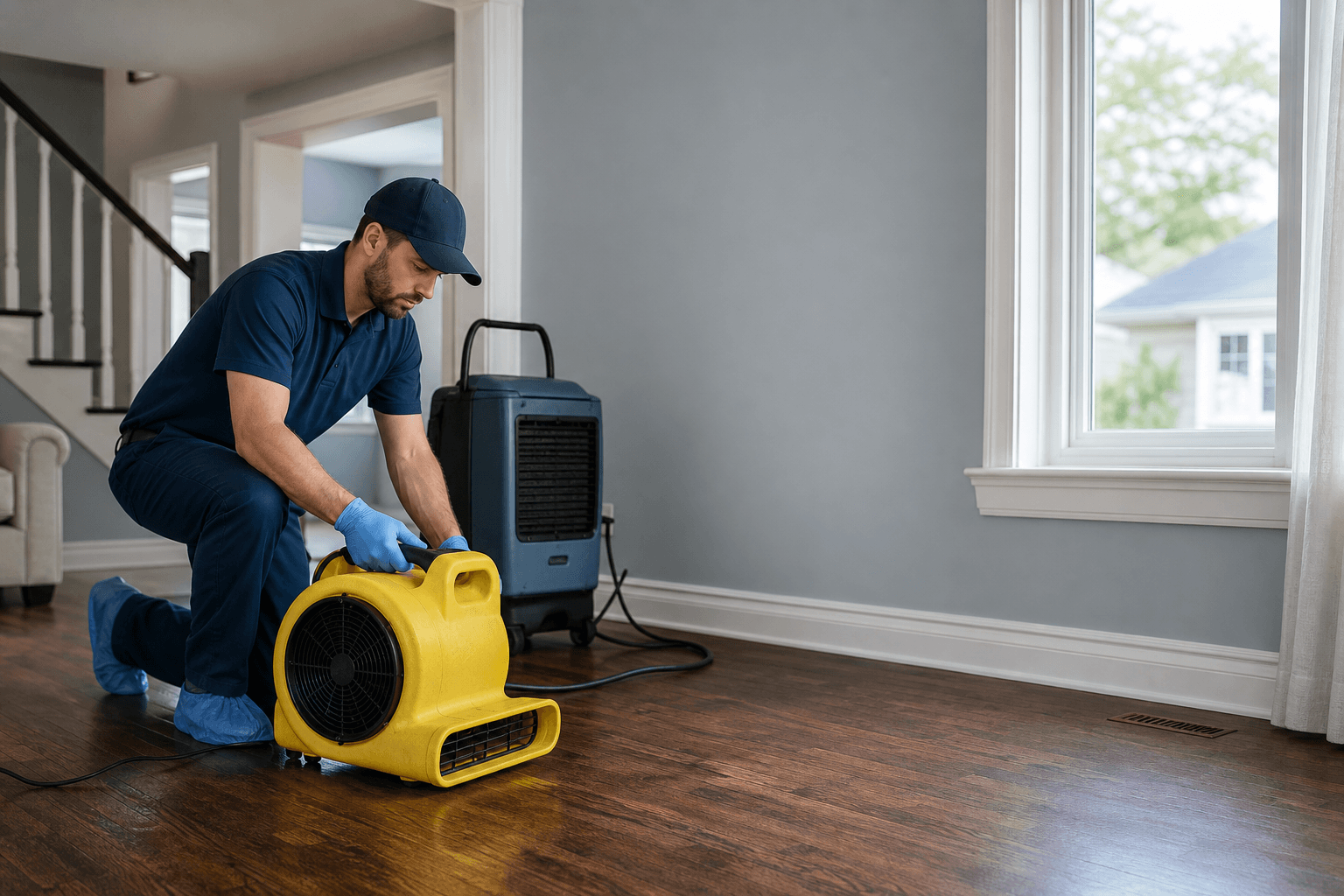
Water Damage Restoration and Repair in Dartmouth, NS
Burst pipes, flooded basements, leaks, and storm water. We extract the water, dry the structure, and handle the water damage repair that follows.
Water damage restoration and repair covers removing water, drying the structure, and fixing what got damaged after a flood, leak, or burst pipe. We handle the whole job for Dartmouth and Halifax-area homes and businesses, from the first pump-out to the final repair.
Water doesn't wait. The longer it sits, the further it spreads, into drywall, under flooring, behind baseboards, and into the framing you can't see. That's where mold starts. So the first thing we do is get the water out and get air moving.
We've dried out and repaired everything from a slow dishwasher leak in a Dartmouth condo to a fully flooded basement after a spring storm. Same approach every time: find the water, remove it, dry the structure all the way down, complete the water damage repair, and document it so your insurance claim holds up.
What's included in water damage restoration and repair
- Water extraction with truck-mounted and portable pumps
- Moisture mapping so we find water you can't see
- Structural drying with commercial air movers and dehumidifiers
- Removing unsalvageable drywall, insulation, and flooring
- Water damage repair of affected finishes once the structure is dry
- Antimicrobial treatment to stop mold before it starts
- Photos and moisture readings for your insurance claim
When you need water damage restoration and repair
- A burst or frozen pipe, common in Maritime winters
- A basement that floods during heavy rain or spring melt
- An overflowing washer, dishwasher, or water heater
- A roof or window leak that's soaked into the walls
- Sewer backup or a sump pump that quit
Why dry it properly before you repair
A fan and an open window won't cut it. Wet drywall and framing can look dry on the surface while they're still soaked underneath. We use moisture meters to confirm the structure is actually dry, not just dry to the touch. Skip that step and you're looking at warped floors, peeling paint, failed repairs, and mold a few weeks later.
Serving Dartmouth and the whole Halifax area
Dartmouth Water Damage Pros is based in Dartmouth and covers the surrounding communities. That includes Dartmouth, Halifax, Bedford, Lower Sackville, and Clayton Park. See all areas we serve →
Water Damage Restoration: common questions
What should I do immediately after water damage?
Stay safe first: avoid standing water near electrical outlets, panels, or appliances, and shut off the water source if you can do it safely. Then get water out of the home as soon as possible and start drying. Move valuables and furniture out of the wet area, don't run the HVAC through a soaked space if you can help it, and skip bleach on porous materials like drywall or carpet, it doesn't dry the structure. Call a Dartmouth water damage restoration crew quickly. Mold can begin within 24 to 48 hours in Nova Scotia's humid climate, and the longer materials stay wet, the more you may need to tear out and replace.
How long does water damage restoration take in Dartmouth?
Most residential water damage restoration jobs in Dartmouth take between 3 and 7 days, though it depends on how much water got in and how long it sat. A small pipe leak caught quickly might dry in 3 days. A flooded finished basement with soaked drywall and insulation can take a week or more, plus additional time if materials need to be torn out and replaced. We monitor moisture readings each day and don't wrap up until the structure is actually dry, not just surface dry.
Will my home insurance cover water damage restoration in Dartmouth?
It depends on the cause. Most standard home insurance policies in Nova Scotia cover sudden, accidental water damage, like a burst pipe or an overflowing appliance. They typically don't cover gradual leaks, maintenance issues, or overland flooding unless you have a specific rider. We document the damage thoroughly with photos and moisture readings, which helps your claim go smoothly. If you're not sure what's covered, call us first and we'll help you understand what to report.
How do I know if my home is actually dry after water damage?
You need a moisture meter, not just a look and a feel. Materials like drywall, subfloor, and framing can feel dry to the touch while they're still holding moisture inside. We take readings throughout the drying process and compare them to baseline values for each material. A job isn't done until the readings are back in a normal range. Skipping that step is how people end up with mold a few weeks later, especially in Dartmouth's humid coastal climate.
Can hardwood floors be saved after water damage?
Sometimes, yes. Hardwood that's been wet for less than 24 to 48 hours and hasn't started cupping or warping significantly can often be dried in place with specialty drying mats and controlled airflow. Floors that have been wet longer, that are visibly buckled, or that have mold underneath usually can't be saved. We assess each job honestly, whether restoration or replacement is the better call, for both cost and your home's long-term condition.
What's the difference between water extraction and full water damage restoration?
Water extraction is just removing the standing water, which is the first step. Full restoration is the complete job: extraction, then structural drying to remove moisture from walls, floors, and framing, then damage assessment, then removal and repair of wet materials, plus documentation for insurance. A pump-out without the drying stage leaves moisture behind in the structure, and that's what causes mold and long-term damage in Halifax-area homes.
How quickly do you need to act after a flood or water leak?
As fast as possible. Mold can begin growing within 24 to 48 hours in a damp environment, and Nova Scotia's humid climate makes that timeline reliable. The first few hours are critical for stopping water spread and getting extraction started. Materials that stay wet longer are more likely to need full replacement rather than drying. Even if you can't reach a restoration crew immediately, start moving water out with whatever you have and open windows if the weather allows.
Got water damage or mold? Let's sort it out.
Call and tell us what's going on, or send a message and we'll get right back to you. Dartmouth's local restoration company covering the whole Halifax area.