Structural Drying Services in Dartmouth, NS
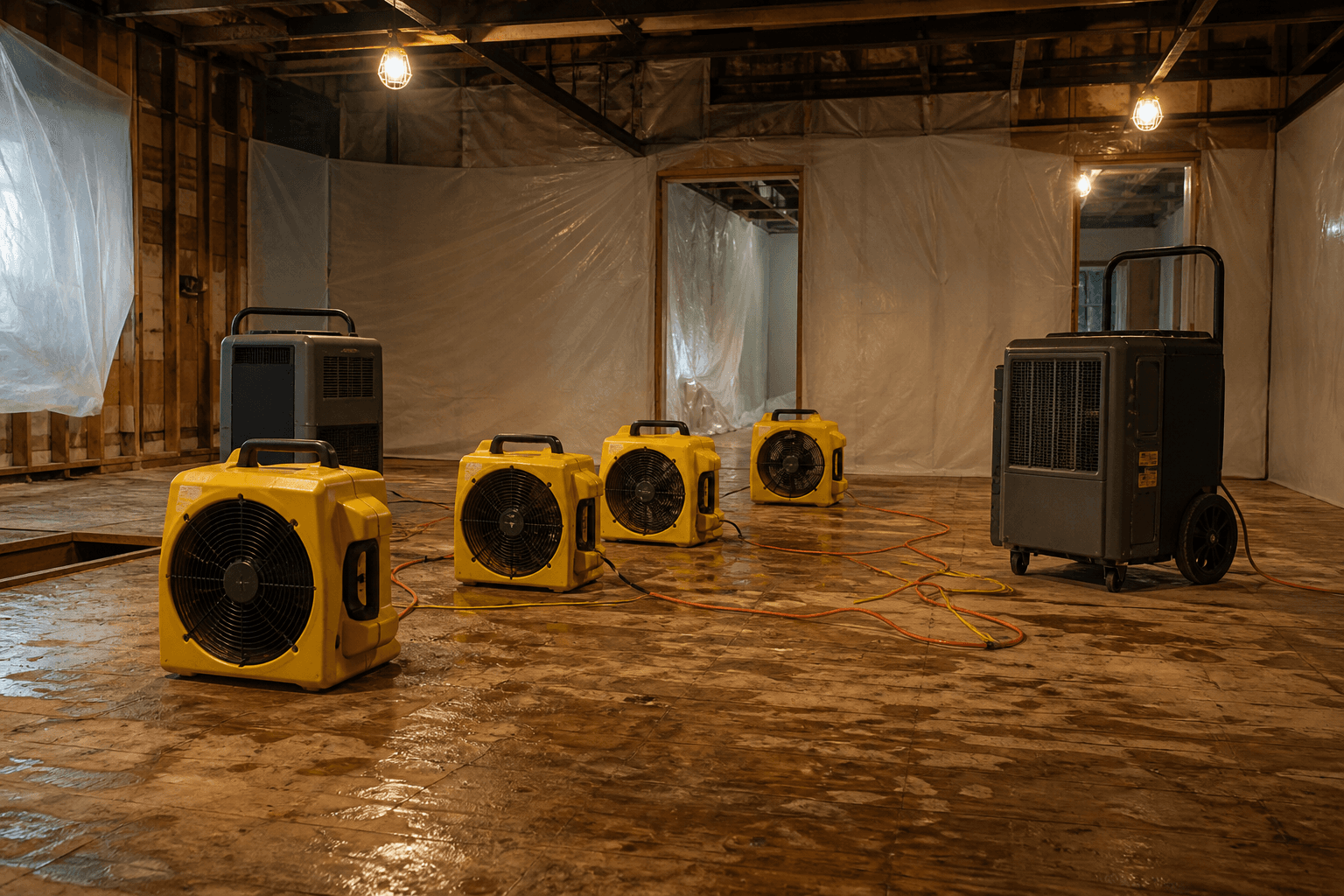
After the water is out, the real drying starts. We dry the framing, drywall, subfloor, and insulation all the way through using commercial air movers and dehumidifiers.
Structural drying uses commercial air movers and dehumidifiers to remove moisture from inside walls, floors, framing, and insulation after water damage. It's the most important step most people skip, a surface that looks dry can still be soaked underneath. We monitor with moisture meters until the structure is genuinely dry.
Visible water is just the start. After extraction, moisture wicks into studs, subfloor, drywall paper, and insulation. A floor that looks dry on top can still be holding gallons of water in the materials below.
Surface drying with household fans isn't structural drying. Skip this step and you're looking at mold, warped floors, and repairs that fail months later, even when everything looked fine at first glance.
Our structural drying process
- Establish a drying plan based on moisture meter readings throughout the affected area
- Set commercial air movers in a calculated pattern to move air through wet materials
- Run high-capacity dehumidifiers to pull moisture out of the air and accelerate evaporation
- Take daily moisture readings to track progress and adjust equipment placement
- Document drying progress with readings and photos for your insurance claim
- Confirm dry standard is met before closing up walls or replacing flooring
How long does structural drying take?
For most residential water damage restoration jobs in Dartmouth, structural drying typically takes 3 to 5 days. Finished basements with soaked drywall usually take longer because moisture hides inside multiple layers of material. How long water sat before we arrived, what got wet, and the humidity that day all affect the timeline. We don't guess. Moisture meters tell us when it's actually done.
Why it matters more than extraction
Extraction removes the bulk water in a few hours. Drying the structure properly takes days. This is where most DIY attempts fail and where mold gets its foothold. Done right, structural drying is the difference between a clean restoration and tearing out walls three weeks later because moisture was never fully removed.
Serving Dartmouth and the whole Halifax area
Dartmouth Water Damage Pros is based in Dartmouth and covers the surrounding communities. See all areas we serve →
Structural Drying: common questions
What is structural drying and why does it matter?
Structural drying is the process of removing moisture from inside walls, floors, framing, and insulation using commercial air movers and dehumidifiers after water extraction is complete. It matters because materials can look and feel dry on the surface while still holding enough moisture to grow mold, warp floors, and cause repairs to fail. In Dartmouth's humid climate, skipping structural drying is one of the most common reasons water damage restoration jobs turn into mold remediation jobs a few weeks later.
How long does structural drying take after a flood?
Most residential structural drying jobs in Dartmouth take 3 to 5 days with commercial equipment running continuously. Finished basements with soaked drywall and carpet usually take longer because moisture sits in multiple layers of material. How long the water sat before extraction started, what got wet, and current humidity all affect the timeline. We take daily moisture readings and don't wrap up until the structure meets dry standards for each material type.
Can I run my own fans to dry the structure myself?
Household fans move air across a surface, but they don't pull moisture out of walls, subfloor, and framing the way commercial structural drying equipment does. Without high-capacity dehumidifiers running alongside air movers, you're mostly just circulating humid air, which can actually slow drying in Nova Scotia's coastal climate. We see this fail regularly in Dartmouth and Halifax homes: the floor feels dry, mold shows up inside the walls two weeks later.
How do you know when a structure is actually dry?
We use pin-type and non-invasive moisture meters to take readings inside the materials, not just on the surface. Each material type has a target dry standard, and we compare daily readings against baseline values until they reach that range. A job isn't done when it looks or feels dry. It's done when the meter confirms the structure is genuinely dry throughout, which is what protects you from mold and failed repairs during water damage restoration.
Do I need structural drying if the water is gone and the floor feels dry?
Yes, almost certainly. Water extraction removes standing water, but moisture wicks into drywall, subfloor, and framing and stays there long after the floor feels dry to the touch. Skipping structural drying is the most common mistake we see after a flood in Dartmouth and the Halifax area. The surface dries first while hidden materials stay damp, and that's exactly where mold establishes within days.
Why do you use dehumidifiers during structural drying?
Dehumidifiers pull moisture out of the air so wet materials can actually release the water trapped inside them. Without dehumidification, evaporation just raises the humidity in the room and slows or stops the drying process, especially in basements and enclosed spaces. High-capacity commercial dehumidifiers work alongside air movers as a system: movers push dry air through wet materials, dehumidifiers capture the moisture, and moisture meters confirm progress until structural drying is complete.
Got water damage or mold? Let's sort it out.
Call and tell us what's going on, or send a message and we'll get right back to you. Dartmouth's local restoration company covering the whole Halifax area.