Mold Inspections & Air Quality Testing in Dartmouth, NS
Find where mold is hiding, confirm what's in the air, and get a plain-English read on the results. We inspect, test, and tell you exactly what to do next.
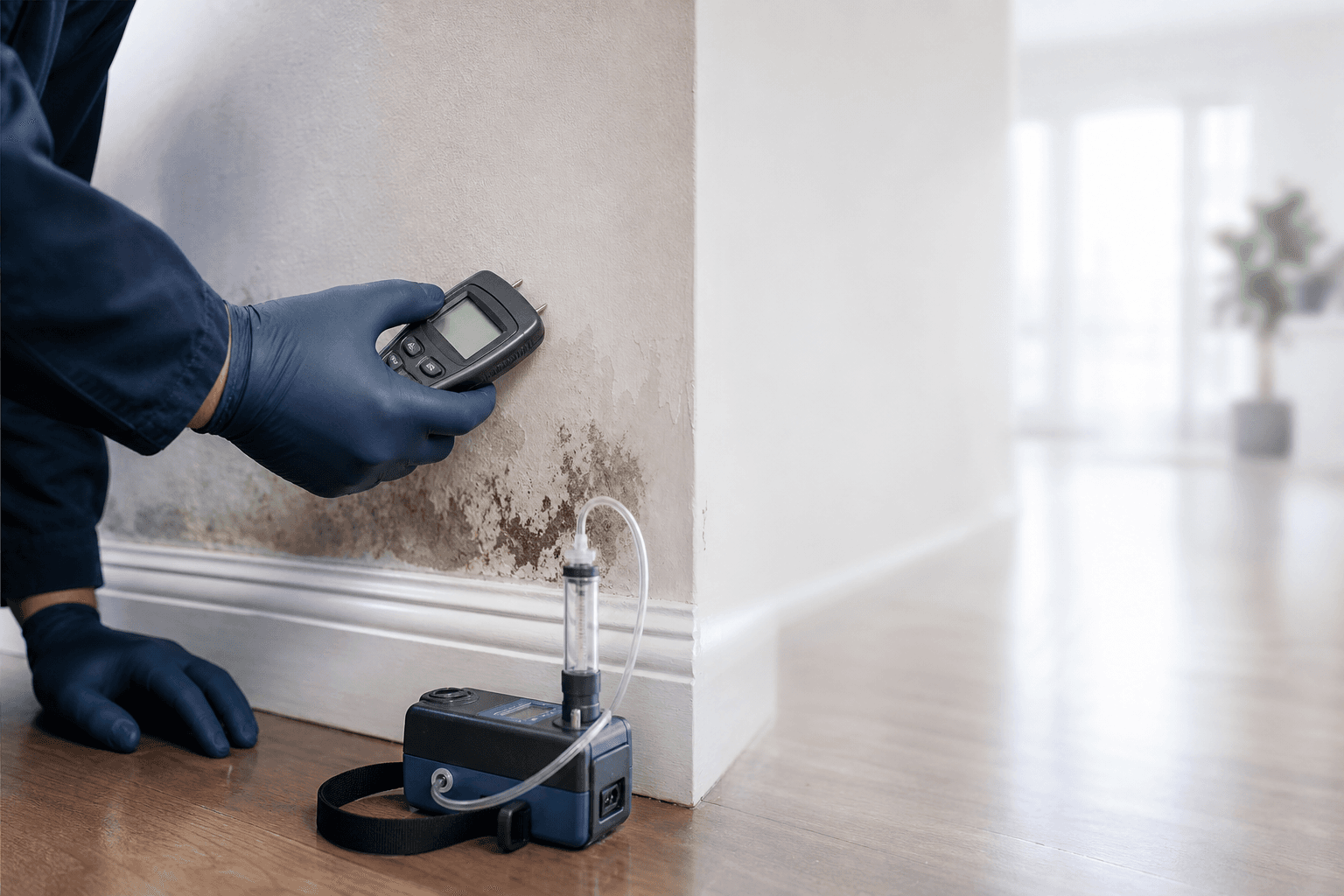
We inspect for mold and test the air quality so you know exactly what you're dealing with. Moisture meters, visual inspection, and lab-analyzed air and surface samples, then a plain-English read on what the results mean and what to do next.
Sometimes you can see the mold. Other times you just smell it, or someone in the house keeps getting stuffed up and you can't figure out why. Either way, an inspection paired with testing tells you what's actually going on before you spend money fixing the wrong thing.
We check the usual suspects, basements, crawl spaces, around windows, under sinks, and behind appliances, using moisture meters to find damp spots inside walls. Where testing makes sense, we take swab, tape-lift, and air samples and send them to an accredited lab.
When a mold inspection and air quality test makes sense
- You can smell musty odours but can't find the source
- You're buying a home and want peace of mind
- You had a leak or flood and want to be sure it's clear
- Someone in the house has unexplained allergy symptoms
- You see staining or bubbling paint on walls or ceilings
- You want confirmation after mold remediation is done
Types of testing we do
- Air sampling to measure spore levels in a room
- Swab and tape-lift samples from suspect surfaces
- Before-and-after testing to confirm a cleanup worked
- Testing combined with a full inspection in one visit
What you get
A straight answer. We tell you what we found, where it's coming from, and what it'll take to fix it. If testing is needed, we say so and walk you through the lab results in plain language. No upselling, no vague reports.
Serving Dartmouth and the whole Halifax area
Dartmouth Water Damage Pros is based in Dartmouth and covers the surrounding communities. See all areas we serve →
Mold Inspections & Air Quality Testing: common questions
Is mold dangerous to my family?
It can be, especially for kids, seniors, and anyone with asthma, allergies, or a weaker immune system. Common symptoms tied to indoor mold include coughing, congestion, itchy eyes, headaches, and flu-like irritation that improves when you leave the house. Risk depends on the mold type, how much is present, and how long you've been exposed. If your Dartmouth or Halifax-area home smells musty or you've had a past leak, mold air quality testing is a smart first step before bigger remediation.
What does a mold inspection include?
A professional mold inspection covers a visual assessment of the whole property, moisture readings with a meter to find damp areas inside walls and floors, and a thorough check of high-risk spots: basements, crawl spaces, attics, around windows, under sinks, and behind appliances. We document findings with notes and photos, identify the moisture source where possible, and recommend next steps. If lab testing makes sense, we can take samples on the same visit.
How much does a mold inspection cost in Dartmouth?
A standard visual mold inspection in the Dartmouth and Halifax area typically runs between $150 and $400, depending on property size and whether air quality sampling is included. Lab testing adds to the cost but gives you confirmed results on mold type and levels. For peace of mind before a home purchase or after a flood, it's worth the spend.
Should I get a mold inspection before buying a house in Dartmouth?
Yes, especially for any older home, any home with a basement or crawl space, or any property that's been vacant. Maritime homes in the Halifax area are prone to moisture problems, and mold doesn't always show up on a standard home inspection. A dedicated mold inspection checks the spots a general home inspector often misses. If mold is found, it can be factored into negotiations or made a purchase condition.
How long does a mold inspection take?
A typical residential mold inspection in Dartmouth or Halifax takes one to two hours, depending on the size and layout of the home. Larger properties, homes with complex basements, or situations where we suspect hidden mold in multiple areas may take longer. We don't rush it. Finding the source matters more than getting out fast.
Do I need to prepare anything before a mold inspection?
Not much. Make sure we can access all areas, including the basement, crawl space, attic, utility room, and under all sinks. If you've had specific leaks or noticed problem areas, write them down so you can point them out. Don't clean or paint anything before the inspection. That can hide what we're looking for. Let us see the space as it is.
Can a mold inspection miss hidden mold?
Any inspection has limits. Mold inside a wall cavity or deep in insulation isn't visible without demolition. That's why we use moisture meters and sometimes thermal cameras to find wet spots that indicate mold behind the surface. If readings are elevated in a suspicious area, we may recommend sampling or targeted exploration. We'll tell you honestly where the limits of the inspection are and what follow-up makes sense.
How accurate is indoor mold air quality testing?
Lab-analyzed air quality tests are accurate and reliable when collected properly. We use calibrated pumps to pull a measured volume of air through a spore trap cartridge, which captures what's actually floating in your space. The lab counts and identifies the spore types under a microscope. The key is proper sample collection paired with an outdoor baseline sample taken the same day. Done correctly, it gives you a real picture of the air, not a guess.
What is a normal or safe mold spore count indoors?
Indoor mold levels are evaluated against outdoor levels from the same time and day, not a fixed number. Generally, indoor counts should be similar to or lower than outdoor counts, with no dominant mold types that point to active indoor growth. If indoor counts are significantly higher than outside, or if you have elevated levels of a water-damage mold like Stachybotrys or Chaetomium, that's a flag for an active problem. We walk you through what the numbers mean when results come back.
How long does it take to get mold test results?
Standard lab turnaround for mold air quality and surface samples is typically 3 to 5 business days. Rush processing is available at extra cost if you need answers faster. We send samples to an accredited Canadian lab and go over the results with you when they come in. Most people have useful information within a week of sampling.
What's the difference between a mold inspection and air quality testing?
A mold inspection is a visual and instrument-based assessment: we look for mold, use moisture meters, and find the source. Air quality testing uses a pump and lab analysis to measure what's actually floating in the air. They complement each other. An inspection tells you where the problem is. Testing tells you whether it's affecting the air you're breathing. For a real health concern, or before moving family members back after a remediation, testing gives you objective confirmation.
Should I test the air after mold remediation to confirm it worked?
Yes, post-remediation air quality testing is a smart step if you want objective confirmation that the cleanup was complete. We take air samples after the job is done, compare them to pre-remediation readings or outdoor baselines, and confirm that spore levels are back in a normal range. This is especially useful if the mold was extensive, if a family member has health concerns, or if you need documentation for insurance or a real estate transaction.
Does air quality testing detect other pollutants besides mold?
Standard mold air quality testing focuses on fungal spores. If you want broader testing for VOCs, bacteria, formaldehyde, or radon, that's a separate scope outside of what we do. We focus specifically on mold and moisture-related air quality issues in Dartmouth and Halifax homes. If you have concerns about other pollutants, we can point you toward the right testing.
Got water damage or mold? Let's sort it out.
Call and tell us what's going on, or send a message and we'll get right back to you. Dartmouth's local restoration company covering the whole Halifax area.